
Setting the Stage for Smart Shower Tile Decisions
If you’re planning a bathroom remodel, one of the biggest decisions you’ll face is choosing the right shower tile. And honestly, it can feel overwhelming — there are more options on the market today than ever before. As a tile contractor, I’ve helped countless homeowners navigate this exact decision, and I can tell you that the most popular shower tile styles in 2026 reflect a beautiful balance of practicality, durability, and stunning aesthetics.
In this guide, I’m going to walk you through the top shower tile styles trending right now, breaking down the pros, cons, maintenance needs, and best uses for each one. Whether you’re remodeling a master bath or updating a guest shower, this article will give you the information you need to make a confident choice.
Why Choosing the Right Shower Tile Matters More Than You Think

Shower tile isn’t just about looks. It affects how easy your bathroom is to clean, how long it lasts, and even how safe it feels underfoot.
I’ve seen homeowners choose a tile purely for aesthetics, only to regret it six months later because it’s nearly impossible to keep clean. On the flip side, I’ve also seen people go with the most practical option and end up with a shower they don’t even enjoy stepping into.
The goal is finding the right balance — and that starts with understanding your options.
The Most Popular Shower Tile Styles in 2026

1. Large-Format Porcelain Tile: Sleek, Modern, and Low-Maintenance
Large-format porcelain tile has been on the rise for several years, and in 2026, it remains one of the most requested styles I see in bathroom remodeling projects.
These tiles typically come in sizes like 24×48 inches or even larger, which means fewer grout lines. Fewer grout lines means less scrubbing — and every homeowner I’ve ever worked with appreciates that.
Pros:
– Minimal grout lines reduce cleaning effort significantly
– Available in a huge range of colors, textures, and finishes
– Extremely durable and resistant to moisture and staining
– Creates a seamless, high-end look in any shower space
Cons:
– Heavier than smaller tiles, requiring proper substrate preparation
– More difficult to install on curved walls or small spaces
– Mistakes during installation are harder to hide
Best Uses:
Large-format porcelain works beautifully on shower walls, especially in larger walk-in showers. I typically recommend pairing it with a smaller mosaic or textured tile on the shower floor for better traction.
Maintenance:
Wipe down regularly with a non-abrasive cleaner and seal the grout lines annually. The tile itself is virtually maintenance-free.
2. Handmade-Look Tile: Artisan Charm with Modern Appeal
There’s been a strong shift toward tiles that feel warm, organic, and unique — and handmade-look tile fits that demand perfectly.
These tiles are designed to mimic the slight variations, texture, and imperfections of truly handcrafted ceramic tiles. They bring character to a space in a way that perfectly uniform tiles simply can’t.
Pros:
– Creates a warm, textured aesthetic that feels unique
– Works well in both traditional and contemporary bathrooms
– Available in a wide range of glazes and earthy tones
– Each tile looks slightly different, adding visual interest
Cons:
– Uneven surfaces can trap soap scum and require more thorough cleaning
– Variations in size can make installation more complex
– Not ideal for ultra-minimalist or highly modern design schemes
Best Uses:
I love using handmade-look tile as an accent wall in a shower or as the primary tile in a farmhouse or cottage-style bathroom. It pairs especially well with matte fixtures and natural wood tones.
Maintenance:
Because of the textured surface, you’ll want to scrub more frequently to prevent buildup in the textured areas. A mild daily shower spray goes a long way.
3. Natural Stone-Look Tile: The Beauty of Stone Without the Drawbacks
Homeowners have always loved the look of natural stone in a shower. The problem? Real stone is expensive, porous, and requires significant maintenance. That’s where natural stone-look tile comes in.
Today’s porcelain and ceramic tiles have gotten remarkably good at replicating the look of marble, slate, travertine, and limestone — sometimes so closely that it’s hard to tell the difference.
Pros:
– Captures the beauty of natural stone without high maintenance
– Non-porous, making it more resistant to moisture and staining than real stone
– More affordable than genuine natural stone
– Consistent in thickness, making installation straightforward
Cons:
– Up close, a trained eye can sometimes spot the difference from real stone
– The “natural” feel is slightly reduced compared to genuine materials
– Some homeowners find the look less authentic over time
Best Uses:
Natural stone-look tile is a fantastic choice for shower walls, especially in master bathrooms where you want a luxurious feel without the upkeep. It’s also a popular choice for bathroom flooring when used with appropriate slip-resistance ratings.
Maintenance:
One of the biggest advantages here is ease of care. Clean regularly with a pH-neutral cleaner, and you won’t need to worry about sealing like you would with real stone.
4. Mosaic Tile: Timeless Detail and Unbeatable Texture
Mosaic tile never really goes out of style — and in 2026, it’s making a strong comeback in shower design, particularly as a design accent and shower floor tile.
Small mosaic tiles, typically one to two inches in size, offer incredible design flexibility. You can create intricate patterns, use them as a border, or cover an entire shower floor with them for a classic, artisan look.
Pros:
– Excellent for curved or irregular surfaces
– Provides natural grip on shower floors due to increased grout lines
– Endless design possibilities — geometric, hexagonal, penny round, and more
– Works in both small and large showers
Cons:
– More grout lines mean more cleaning
– Installation is more time-intensive than larger tiles
– Pattern alignment requires skilled installation
Best Uses:
I almost always recommend mosaic tile for shower floors — the additional grout lines provide traction that helps prevent slipping. They also work beautifully as a feature strip or niche accent inside larger-format tile designs.
Maintenance:
Grout lines are the challenge here. Regular scrubbing and annual grout sealing are essential to keep mosaic tile looking its best.
5. Textured Finish Tile: Safety Meets Style
Textured tiles have surged in popularity, and I think it’s because homeowners are increasingly aware of how important slip resistance is in a wet shower environment.
These tiles feature surface finishes that provide grip — things like a linen texture, a subtle ridge pattern, or a matte tactile surface. They’re not just safe; they’ve become genuinely stylish in their own right.
Pros:
– Improved slip resistance, especially important on shower floors
– Adds visual depth and a tactile quality to the space
– Matte finishes hide water spots and fingerprints well
– Works well in both modern and transitional bathroom designs
Cons:
– Textured surfaces can be more difficult to clean thoroughly
– Some textures accumulate soap residue faster
– Limited in some color ranges compared to smooth-finish tiles
Best Uses:
Textured tiles shine on shower floors and lower wall sections. I often pair a textured floor tile with a smooth or large-format wall tile to create contrast and balance in the overall shower design.
Maintenance:
A stiff grout brush and a good daily shower spray will keep textured tiles looking clean. Avoid harsh chemicals that can damage the finish.
How to Choose Between Shower Wall Tile and Shower Floor Tile

One of the most common questions I get is: “Can I use the same tile on the walls and the floor?” And the honest answer is — sometimes, but not always.
Here’s what I recommend considering:
– Slip resistance: Floor tiles should have a higher coefficient of friction (COF) than wall tiles. A COF of 0.42 or higher is recommended for wet areas.
– Size: Larger tiles can work on floors in bigger showers but may be harder to install properly in smaller ones.
– Weight: Heavy large-format tiles are fine on floors but require proper wall substrate support.
– Visual balance: Using the same tile everywhere can feel flat. Mixing a large wall tile with a smaller floor tile often creates a more dynamic, intentional look.
I typically help homeowners think through the full picture — not just the tile they love, but how it will work in their specific space.
Tips for Planning Your Shower Tile Installation in Indiana
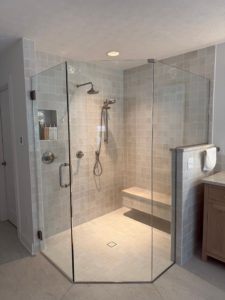
If you’re planning a bathroom remodel in Indiana, there are a few practical things worth keeping in mind during the planning process.
Indiana homes tend to deal with:
– Hard water, which can leave mineral deposits on tile surfaces — making low-maintenance, sealed grout even more important
– Seasonal humidity changes, which is why proper waterproofing behind the tile is critical
– A range of bathroom sizes, from compact guest baths in older homes to large master suites in newer builds
Here are my top planning tips:
- Start with your floor tile choice. It’s the most safety-sensitive surface, and it drives many of the other design decisions.
- Choose your grout color carefully. Grout color has a huge impact on the final look — and lighter grout shows staining more easily.
- Consider niche and accent tile early. If you want a decorative niche or accent wall, plan those tiles into your budget and design upfront.
- Don’t underestimate substrate prep. The best tile job in the world will fail if the waterproofing and substrate underneath aren’t done right.
- Get samples before you commit. Always view tile samples in your actual bathroom — lighting makes a significant difference in how colors and textures appear.
Common Questions About Shower Tile in 2026
What is the most popular shower tile size right now?
Large-format tiles in the 12×24 to 24×48 inch range are among the most popular for shower walls. For floors, 4×4, hexagon, and penny mosaic tiles remain strong favorites.
Is porcelain or ceramic better for shower tile?
Porcelain is generally the better choice for showers because it’s denser, less porous, and more water-resistant than standard ceramic tile. That said, high-quality ceramic tile can work well in certain applications.
How often should shower tile grout be sealed?
I recommend sealing grout at least once a year in an active shower. High-traffic bathrooms may benefit from sealing every six to eight months.
What tile finish is easiest to keep clean in a shower?
Glossy and polished finishes show water spots more easily, while matte and satin finishes tend to hide daily grime better. However, highly textured matte tiles can trap soap scum if not cleaned regularly.
Let Artistic Tile & Design, LLC Help You Create a Shower You’ll Love
Choosing the right shower tile style is one of the most impactful decisions in any bathroom remodel — and it doesn’t have to be stressful. Whether you’re drawn to the sleek look of large-format porcelain, the warmth of handmade-look tile, or the timeless appeal of mosaic, there’s a perfect shower tile option out there for your space and your lifestyle.
At Artistic Tile & Design, LLC, we specialize in helping homeowners throughout Indiana navigate these exact decisions. From helping you select the most popular shower tile styles to handling the full installation with precision and care, we’re here to make your bathroom remodel a smooth and rewarding experience.
We bring real expertise to every project — from proper waterproofing and substrate preparation to flawless tile setting and grout finishing. We don’t cut corners, and we take the time to understand what you actually want in your finished space.
Ready to start planning your bathroom remodel? Contact Artistic Tile & Design, LLC today to schedule your consultation. Let’s talk through your vision, explore your tile options, and build a shower that looks incredible and stands the test of time.